
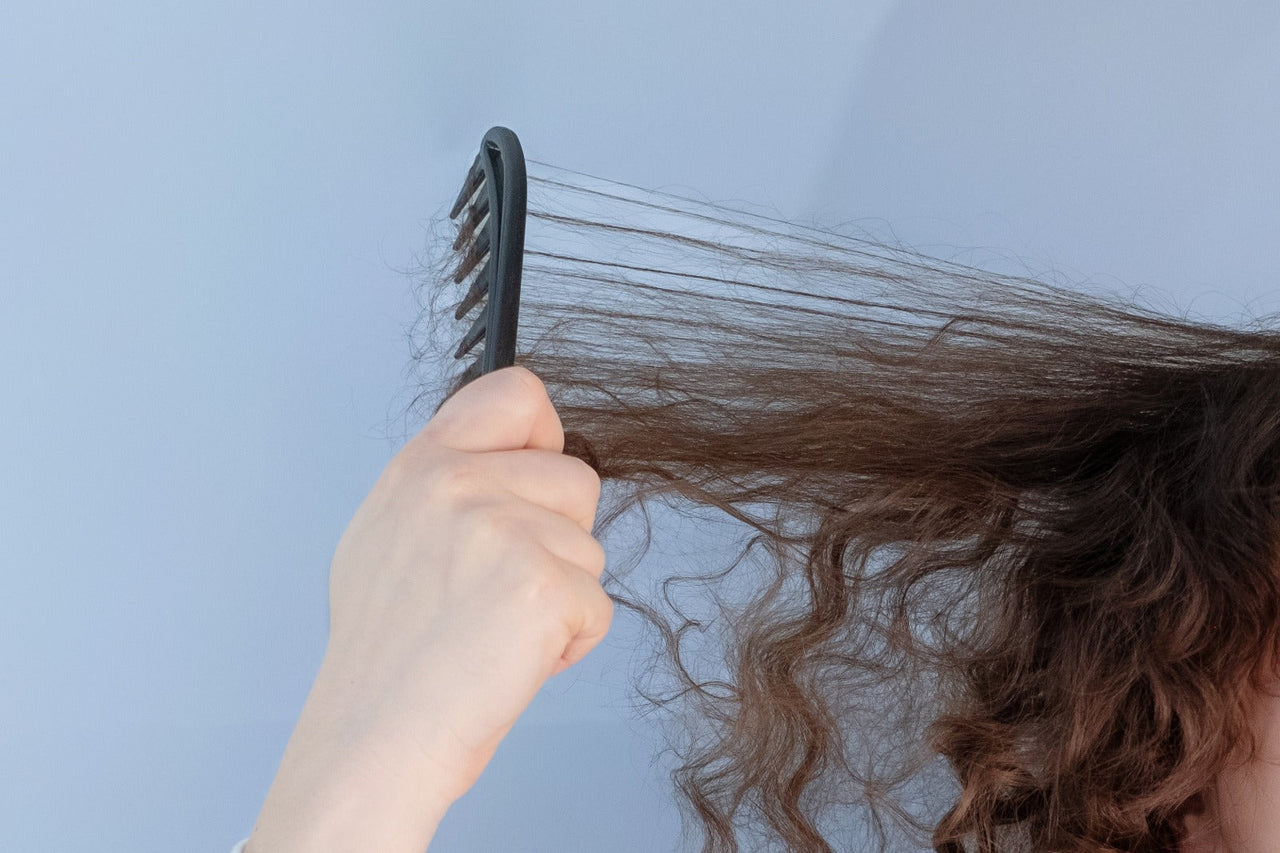
Dry Hair
Your Complete Guide: From Diagnosis to the Right Treatment
Evidence-based medical guide · Backed by Mayo Clinic · AAD · Healthline · WebMD
✦ ✦ ✦
You woke up, looked in the mirror, and your hair was impossibly frizzy. You've tried everything on the market — creams, oils, masks, keratin — and your hair is still dry?
You're not alone. Dry hair is a problem affecting millions of people worldwide, and there are real medical reasons behind it — not just a lack of care. The difference between healthy hair and dry hair is not about using the most expensive products, but about understanding your hair first.
This guide covers everything: why your hair gets dry, the different types of dryness, and how to build the right treatment routine from start to finish — in a simple yet scientific way.
✦ ✦ ✦
1. Is Your Hair Dry or Just in Need of Moisture?
First, let's agree on something important: not every frizzy, dull-looking hair is medically dry. There is a big difference between hair that is parched and needs moisture, and hair that is structurally dry at its core — and the treatment for each is completely different.
What Is Dry Hair Medically — and How Does It Form?
According to Healthline, dry hair occurs when the scalp does not produce enough sebum (natural oil), or when the sebum that is produced doesn't reach the hair ends — leaving the strand unprotected and eroding from the outside.
The hair strand consists of three layers: the cuticle (outer layer), the cortex (middle layer), and the medulla (inner core). When the cuticle is damaged or opens up, hair becomes dry and rough because moisture evaporates from it rapidly.
Dry Hair vs. Moisture Deficiency — The Most Important Question to Ask
◈ Dry Hair: a problem with natural oils — the scalp simply doesn't produce enough sebum to begin with.
◈ Moisture Deficiency: hair loses water and moisture quickly — production may be normal, but the strand cannot retain hydration. An intensive conditioner like Elone Conditioner helps seal moisture into the strand after every wash.
◈ Curly and coily hair: naturally struggles to carry oil from root to tip — so it always appears drier than it actually is.

How to Tell if Your Hair Is Truly Dry
◈ Hair feels rough and dry even immediately after washing.
◈ Ends are always split.
◈ Hair is frizzy and difficult to comb through.
◈ Hair looks dull and lifeless.
◈ Hair breaks when you twist or comb it.

2. Why Does Your Hair Get Dry?
Before treating dry hair, you need to identify the original cause. Causes fall into two categories: things you do externally, and things happening inside your body without you realizing it.
External Causes
Excess Heat
Hair dryers, flat irons, and curling wands are dry hair's worst enemy. According to the AAD, high heat permanently breaks down the keratin protein in the strand and forces open the cuticle, causing moisture to evaporate rapidly. Always use a heat protectant — Elone Keratin Cream provides a protective shield against heat damage before any styling tool.
Chemicals, Coloring, and Repeated Keratin Treatments
Every time you color your hair, apply a keratin treatment, or do a protein treatment, you stress the hair and alter its internal structure.
Sun, Salt Water, and Chlorine
The intense Egyptian sun is a major factor — UV rays penetrate the hair's outer layer and dehydrate the strand. Swimming pools contain chlorine that strips moisture from hair.
Over-Washing
Daily shampooing removes the natural oil from the scalp before it ever reaches the hair ends.
Internal Causes
Hypothyroidism
This is a very important medical cause that goes undetected in many women. According to the Mayo Clinic, an underactive thyroid reduces natural oil production in the skin and scalp and disrupts the hair growth cycle — resulting in dry, shedding, dull hair alongside general fatigue.
Iron Deficiency and Anemia
Iron is responsible for carrying oxygen to hair follicles. When iron levels drop, follicles weaken and produce thin, dry, brittle hair. Iron deficiency is very common — if your hair is both dry and shedding, a blood test to check and correct iron levels is the right first step.
Hormonal Changes
Pregnancy, breastfeeding, the postpartum period, and menopause — all are phases when the body's hormones shift and directly affect the sebaceous glands in the scalp. Dry hair in your forties isn't laziness — it's hormones.
Not Drinking Enough Water
If you're drinking less than 8 glasses of water a day, your hair will show it before your skin does.
Balanced Nutrition
Focus on omega-3 found in fatty fish and walnuts, and zinc in nuts and pumpkin seeds, as they support the sebaceous glands and improve the quality of the natural sebum that moisturizes the strand from the root. Avoid refined sugars and fried foods as they increase inflammation and weaken the hair strand's ability to retain moisture. Pairing good nutrition with a complete hair care system like Elone Hair Care delivers results from both inside and outside.

3. The Right Dry Hair Routine — Step by Step, From Washing to Sleep
According to AAD recommendations, caring for dry hair is not just about the products you use — it's about how, when, and in what order you use them.
How to Wash Dry Hair Correctly
1. Reduce washing frequency — two to three times per week at most.
2. Wash with lukewarm water. A final cold-water rinse in the last minute helps seal the hair's outer cuticle.
3. Shampoo on the scalp only — not the ends. Let it run down the hair as it rinses out.
4. Conditioner from mid-length to ends — not on the scalp. Leave it on for two to three minutes before rinsing.
5. Do not rub your hair with a towel — gently press and squeeze, or wrap it in a soft cotton cloth.
6. If you don't urgently need a hair dryer, let your hair air-dry naturally.
Creams, Oils, and Masks for Dry Hair
Weekly Deep Moisture Mask
At least once a week — apply a deep moisture mask, wrap your hair in a shower cap, and leave it on for 20 minutes to an hour. Gentle heat helps the ingredients penetrate the strand. Elone Mask contains Spirulina + Keratin + Aquaxyl — a concentrated formula that revives dry, color-damaged, or repeatedly treated hair from the first use. Use it weekly in place of your regular conditioner.
Daily Cream After Showering
Apply a moisturizing cream to damp hair before drying. Elone Keratin Cream (Shea + Keratin + Argan, sulfate-free) protects hair from heat and humidity and gives it natural softness and shine. Apply it to damp hair as the last step before drying.
End Oil
Two to three drops on the ends only — not the scalp. Oil coats the hair's outer layer and locks moisture inside the strand. Argan oil, jojoba oil, and camellia oil are the best for dry hair.
|
💡 The Golden Rule Oils lock moisture in — they don't add it. Use them after a water-based moisturizer, not instead of one. |
Night-Time Routine for Moisturizing During Sleep
◈ Two drops of a lightweight oil on the ends before bed.
◈ A satin or silk pillowcase — this makes the biggest difference you'll feel in the morning.
◈ If your hair is very long, a satin bonnet is better than a rubber elastic.

|
💊 Elone Hair Care Range for Dry Hair — by Bluebell Pharmaceuticals |
|
Product |
Key Benefit |
|
Elone Shampoo Keratin + Protein + Argan + Vitamin E |
Cleanses gently, repairs damaged and split hair, and strengthens from root to tip. Suitable for dry and chemically treated hair. |
|
Elone Conditioner 10% Hydrolyzed Keratin + Silk Protein + Argan + Shea |
Deeply moisturizes and repairs damage from coloring and keratin. Detangles and reduces frizz. Use after every wash. |
|
Elone Keratin Cream Shea + Keratin + Argan — Sulfate-Free |
Protects hair from heat and humidity, delivering natural softness and shine. Apply to damp hair as the final step before drying. |
|
Elone Mask Spirulina + Keratin + Aquaxyl — Concentrated Formula |
The weekly deep conditioning treatment. Revives hair deadened by repeated coloring and keratin. You'll feel the softness from the very first use. |
|
⚠️ The Correct Order Elone Shampoo → Elone Conditioner → dry hair → Elone Keratin Cream. Weekly: replace regular conditioner with Elone Mask. |
Explore the full Elone range: ebluebell.com/collections/elone →
Hair Oils — Which Is Best and How to Use Them?
Argan Oil
Liquid gold for dry hair. Lightweight, rich in Vitamin E and fatty acids, it adds shine and moisture without weighing hair down. Suitable for all dry hair types.
Coconut Oil
Beneficial but not for every hair type. It is relatively heavy and penetrates the strand. Best used as a pre-wash mask rather than a daily moisturizer.
Jojoba Oil
The oil closest to the scalp's natural sebum — it tricks the scalp into thinking it doesn't need to produce more. Ideal for dry hair with an oily scalp.
Camellia Oil
Very lightweight, gives a beautiful natural shine. One of the best oils for fine, dry hair.
Keratin for Dry Hair — Benefit or Hype?
Keratin gives hair wonderful smoothness and shine initially — and that's real. But the other reality is: many keratin products contain formaldehyde, which opens the cuticle with heat and penetrates it. Over the long term, excessive repetition makes hair drier and more brittle because the cuticle becomes damaged.
The recommendation: keratin once or twice per year, maximum.
5. Frizz, Breakage, and Premature Dullness — Dry Hair Problems and Solutions
Why Does Dry Hair Frizz — and How to Treat It?
Frizz is not just a cosmetic issue — it is a sign that the outer layers of the hair strand are open. The fix is not an expensive serum. The fix is:
◈ Cold water at the end of your shower to close the cuticle.
◈ A wide-tooth comb on wet hair — not a brush. A deeply conditioning product like Elone Conditioner closes the cuticle and eliminates frizz with every wash.
◈ A moisturizing cream applied to damp hair before drying.
◈ A light serum oil on the ends after drying.
◈ A satin pillowcase at night — try it for one week and you'll feel the difference.
Breakage from the Ends — The Real Cause and Fix
According to WebMD, split ends and breakage are an inevitable result of untreated dry hair. The cuticle at the ends is most exposed to damage because it is the farthest point from the scalp and its nourishment.
◈ Trim ends at least every three months.
◈ Weekly deep moisture mask with extra focus on the ends.
◈ Avoid tight rubber elastics on the ends.
6. The 5 Most Common Mistakes You're Making With Your Dry Hair Without Knowing It
This is the moment you'll say, "That's exactly me!" — get ready.
Mistake #1: You're Washing Your Hair Every Day
Shampoo is designed to remove dirt and excess oil. When you use it daily on already-dry hair, you strip away the little natural oil that exists and end up even drier. Elone Shampoo is specifically formulated to cleanse gently without stripping natural moisture — but even so, twice a week is the right frequency for dry hair.
Mistake #2: Using High Heat Every Day Without Protection
If you must use heat, always apply a heat protectant first, and use a medium temperature setting — never the highest.
Mistake #3: Washing Hair with Hot Water
Hot water violently forces open the cuticle, strips natural oil, and leaves the strand wide open. The fix: lukewarm water.
Mistake #4: Neglecting the Scalp and Focusing Only on the Ends
Hair grows from the scalp. If the scalp is unhealthy and poorly nourished, the ends will suffer no matter what you do. Massage your scalp with a light oil once a week to improve circulation.
Mistake #5: Changing Products Every Week
Your hair doesn't need surprises — it needs consistency. When you constantly switch products, you don't give hair a chance to respond. Give any product at least a full month before judging it.
7. When to See a Doctor — Signs Your Hair Needs More Than a Routine
According to Healthline, if your dry hair doesn't improve after a month of changing your routine and using appropriate products, it's time to see a doctor — not buy a more expensive product.
Normal Dryness vs. Pathological Dryness
◈ Normal dryness: improves with routine changes and appropriate products within 4 to 8 weeks.
◈ Pathological dryness: persists despite proper care, accompanied by excess shedding, fatigue, feeling cold, or weight changes.
See a Doctor Immediately if You Notice Any of These:
◈ Sudden dry hair without any change in your routine.
◈ Heavy shedding alongside dryness at the same time.
◈ General fatigue and weight gain — signs of hypothyroidism.
◈ Dry hair with very dry skin and brittle nails — iron or vitamin deficiency.
◈ Hair breaking from the root, not the ends.
◈ Unusual redness or flaking on the scalp.
Medical Conditions That Cause Dry Hair
According to the Mayo Clinic, the most common medical conditions causing dry hair are:
◈ Hypothyroidism — the most common medical cause.
◈ Iron deficiency and anemia.
◈ Vitamin D or B12 deficiency.
◈ Hypoparathyroidism — parathyroid hormone deficiency.
◈ Eczema or psoriasis of the scalp.
Scientific References
1. Healthline — Causes and Treatment of Dry Hair
2. Healthline — Home Remedies for Dry Scalp
4. WebMD — Common Hair Problems
6. AAD — Habits That Damage Hair
8. Mayo Clinic — Hair Loss and Causes
9. Mayo Clinic — Hashimoto's and Dry Hair
In Closing
If you have a question or can't identify your hair type, visit a dermatologist or hair specialist — one hour with a specialist is worth years of trial-and-error.
For more products and specialized medical articles on hair and scalp care: Visit ebluebell.com →
Shop the Elone dry hair range: ebluebell.com/collections/elone →
